
Sandpiper Folk shares practical, down-to-earth guidance on uk folk, acoustic and roots music blog for readers across the UK.
- 0123456789
- Angle Bd Abdelmoumen & rue soumaya, Résidence
- [email protected]
Sandpiper Folk shares practical, down-to-earth guidance on uk folk, acoustic and roots music blog for readers across the UK.
 By Eleanor Whitcombe
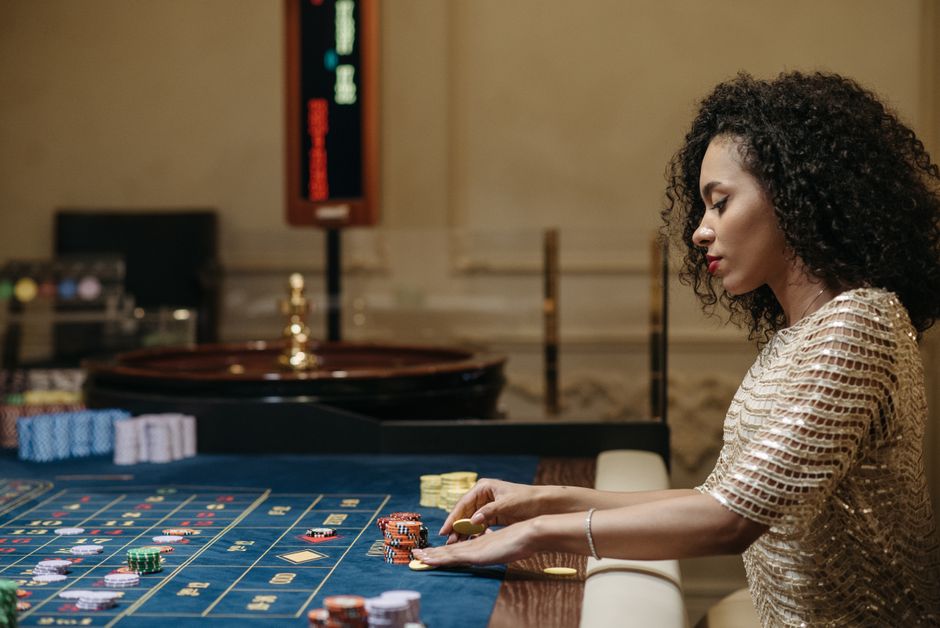
Ask ten people why they gamble and you'll get ten different answers: the thrill, the math, the escape, the chance to turn twenty bucks into two thousand. Ask them why they keep gambling and the answers get more interesting. It's rarely just about money. It's about the puzzle. Slot players chase bonus rounds like treasure hunters. Poker players read opponents like cheap paperbacks. Sports bettors argue about closing line value at dinner parties. The iGaming world is vast, weird, and endlessly fascinating — and if you're going to spend real time and real money in it, you should understand how it actually works.
This isn't a hype piece. No promises of easy riches, no breathless talk about "secret strategies the casinos don't want you to know." Just an honest look at the four pillars of online gambling — slots, casino table games, sports betting, and poker — and how to approach each one without lighting your bankroll on fire.
Slots are the casino's bread and butter, and there's a reason for that. They're simple, they're fast, and they don't require you to make a single decision. Pull the lever (or tap the screen), watch the reels spin, repeat. That simplicity is exactly what makes them dangerous.
Every slot machine runs on something called RTP — return to player. A slot with 96% RTP pays back 96 cents for every dollar wagered over millions of spins. The remaining 4% is the house edge, and it's baked into the game's math, not adjustable by how you spin or when you stop. Ten dollars a spin at 4% house edge means you're theoretically losing 40 cents per spin, whether you win or lose that particular round.
What actually matters when choosing a slot:
A practical tip: pick a bankroll, divide it into at least 100 spins, and never chase. If you sit down with $200 and spin $2 per round, you've got 100 shots at a big hit. Bump that to $10 spins and you've got twenty bullets. Twenty is not a session — that's a coin flip with extra steps.
Blackjack and baccarat look like games of chance, and mostly they are. But blackjack has one crucial difference: optimal strategy. A player who hits, stands, splits, and doubles according to basic strategy cuts the house edge down to roughly 0.5% on a good ruleset. A player who plays by gut feeling can push that edge past 2%.
That's not a small gap. At 0.5%, $10,000 in total wagers costs you about $50 on average. At 2.5%, it costs you $250. Same game, same deck, five times the loss. You can read more about it on สล็อต.
Roulette and craps have their own quirks worth knowing. European roulette has one zero, American has two — always pick European if given the option. The house edge drops from 5.26% to 2.7% with that single decision. In craps, the pass/don't pass line with full odds betting is statistically one of the best wagers in any casino, land-based or online. The center-table prop bets are thrilling and terrible — edges north of 10% on some of them.
Sports betting gets romanticized as a game of knowledge. In reality, it's a game of edges. The bookmaker doesn't care who wins the game — they care about balancing action so they collect the vig (the commission built into the odds) no matter the outcome. Your job as a bettor is to find spots where their line is wrong.
Two concepts that separate casual bettors from long-term winners:
Bankroll management isn't optional. Unit sizing of 1-2% per bet is standard for a reason. Even the sharpest bettor loses 45% of well-priced wagers over time.
Poker is the outlier in the iGaming world because you're not playing against the house — you're playing against other people, and the house takes a rake. That changes everything. Skill actually determines outcomes over the long run, which means a strong player can sustain a win rate that a slot player never could.
But there's a catch. Rake — typically 5% of each pot capped at a few dollars — destroys marginal winners. At micro stakes, the rake eats most of the profit. This is why moving up in stakes is often more important than endless study. A player crushing $0.10/$0.25 for 5bb/100 might actually lose less money than a player grinding $1/$2 for 2bb/100 once rake is factored in.
What actually improves your win rate: hand selection discipline, position awareness, and the willingness to fold. Most losing players lose because they play too many hands, not because they get unlucky.
Online casinos and sportsbooks throw bonuses around like confetti, and they're worth understanding. Most bonuses come with wagering requirements — you might need to bet $3,000 before you can withdraw a $50 bonus. That's not a gift; it's a marketing cost. Read the terms, compare the playthrough to the RTP, and only pursue bonuses that are actually beatable.
The hard truth: every game in iGaming is designed so the operator profits over time. Slots, table games, betting — all have built-in edges. Poker is the only arena where a sufficiently skilled player can flip the script, and even that requires discipline, study, and the humility to fold when you're beat.
None of this means you shouldn't play. It means you should play informed. Know the RTP of your favorite slot. Know basic strategy at the blackjack table. Track your bets and your results. Set loss limits before you sit down, not after you're down three buy-ins. The people who enjoy this hobby longest are the ones who treat it like a cost of entertainment rather than a financial plan. That's not boring — that's what separates a fun Saturday night from a story you don't want to tell.


We are not gonna make spamming
