
Sandpiper Folk shares practical, down-to-earth guidance on uk folk, acoustic and roots music blog for readers across the UK.
- 0123456789
- Angle Bd Abdelmoumen & rue soumaya, Résidence
- [email protected]
Sandpiper Folk shares practical, down-to-earth guidance on uk folk, acoustic and roots music blog for readers across the UK.
 By James Pemberton
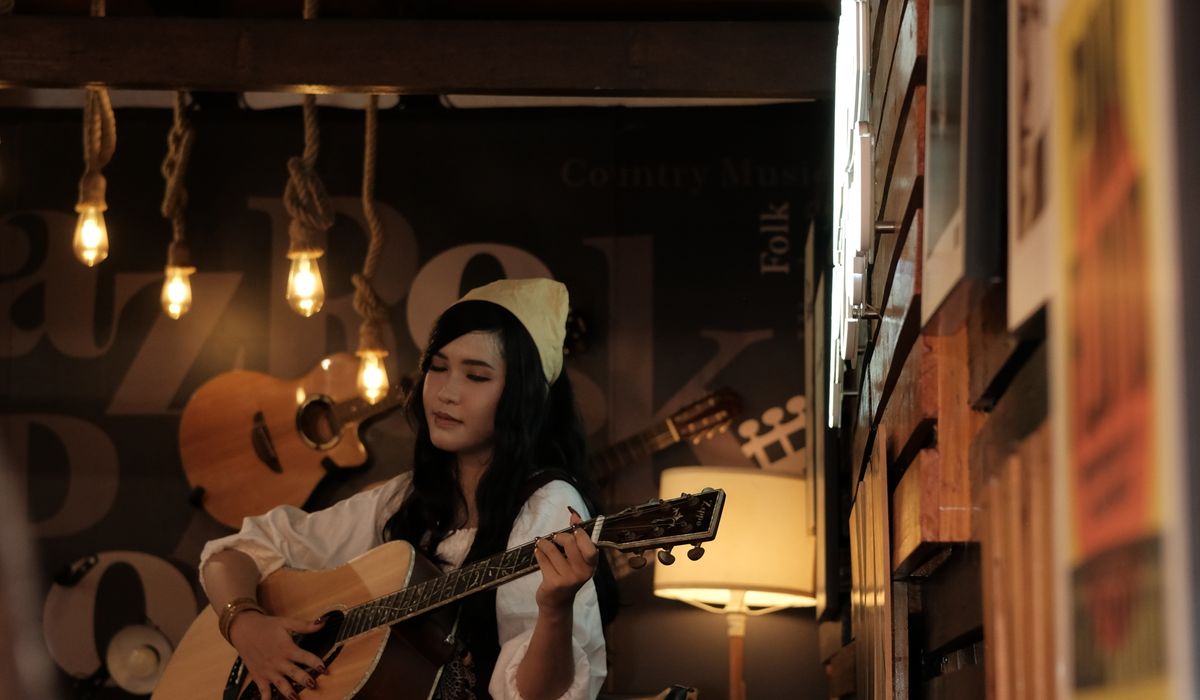
There is a particular pleasure in hearing a trio for the first time in a back room where the ceiling is low and the audience sits close enough to hear the bow change direction on the fiddle. Marlbrook — Ellen Marsh, Tom Aldridge and Ruth Kettle — have spent three years working the pub corners and village halls of the Herefordshire–Shropshire border, and their debut, 'Nettle and Thorn', does something unusually disciplined: it refuses to inflate what already works in a small room. Nine tracks, a little under forty minutes, self-released and recorded across four days in a converted barn near Leominster. No string section, no session drummer, no attempt to sound like a bigger outfit than they are.
That restraint is the record's defining decision, and it is worth saying plainly at the top: this is a debut that knows what it is. If you have been waiting for a young English trio to make an album that respects the tradition without treating it as a museum piece, start here.
The harmonies are the spine of the whole thing. Marsh sings the low lead, Aldridge takes the tenor line, and Kettle sits above both with a high harmony that never tips into the choral. They are singing in a recognisably English manner — close, unforced, built on thirds and fifths, with the tuning of the syllables considered as carefully as the notes. What marks them out is what they resist: no grand key change on the final chorus, no stacking of parts simply because three voices are available.
Listen to 'Three Fields Away', where the last verse drops to unison and the song suddenly feels twice as wide. Or the title track, where Kettle holds a single high note through a line change and the whole arrangement narrows to a thread. That instinct — to take things away rather than add them — is rare in a first album, and it is the reason the record rewards repeated listening rather than one attentive pass.
Instrumentally the palette is deliberately narrow: two guitars, bouzouki, fiddle, a five-string fiddle on two tracks, and a small harmonium that appears on perhaps four songs and is never asked to do more than hold a drone or double a melody. The guitars are mostly in dropped and open tunings, which gives the accompaniment a low, ringing quality that sits well under the voices.
The production matches: tracked mostly live with a handful of overdubs, mixed with the voices forward and barely any reverb. On headphones you can hear the barn — the slight tail on the harmonium, the creak of a chair before the last verse of 'Winter Barley'. It is a warm record rather than a polished one, and it should be played on something better than a phone speaker to be heard properly.
Almost everything here is original, but the writing is steeped in the cadences and concerns of English rural song: weather, work, leaving, and the small betrayals that families manage. 'Blackthorn Winter' sets a hard season against a failing courtship, and the imagery never strains for the poetic. 'Hedge Laying Song' is the most obviously traditional-sounding piece, built on a call-and-response that will land instantly at a festival singaround. 'The Ferryman's Daughter' is the closest thing to a narrative ballad, and it earns its five minutes.
Where lesser writers reach for archaism, Marlbrook write plainly, and the odd modern detail — a telephone, a van, a hospital corridor — sits comfortably beside the hares and hedgerows. That is harder to pull off than it looks.
Not everything lands. 'All the Small Hours' runs a minute longer than its idea sustains, and the closing instrumental, pleasant as it is, would have made a better hidden track than a finale. Aldridge's lead vocal on 'The Long Walk Home' sits a shade too far back in the mix compared with the rest of the record, which is a shame because the performance itself is good. These are small grumbles. On a debut, the more interesting fault is caution: there are moments where you sense the trio holding something back, and a second album will need a little more risk.
Marlbrook are a live band first, and the album makes most sense in that context — three voices around one microphone, no setlist written in stone, a willingness to try something unrehearsed. Catch them in a small venue if you can; the material breathes differently when there is nowhere to hide and no foldback.
The album is self-released on CD and digital, sold at gigs and through their own mailing list. If your taste runs to the sparser end of English folk — harmony-led, unadorned, honest about where it comes from — 'Nettle and Thorn' deserves a place beside the records you actually return to. A confident, quietly stubborn first statement, and a strong hint of something better still to come.


We are not gonna make spamming
